loading
Case Studies of Photovoltaic Power Generation Applied in Schools - 太阳能源公司
SCROLL

Case Studies of Photovoltaic Power Generation Applied in Schools

The successful delivery of a photovoltaic power generation project hinges on the systematic resolution of three core issues: matching degree of equipment selection, scenario adaptability and long-term operation and maintenance guarantees. In practical applications across Hubei, these dimensions directly determine the project’s payback period and full-lifecycle returns.

The technical compatibility of high-efficiency modules stands as the primary consideration. Taking LONGi HIMO X10 series as an example, its 650W single-glass modules adopt N-type TOPCon wafers paired with BC technology, delivering higher installed power density within the same installation area. Such technical features make them particularly suitable for industrial and commercial rooftop scenarios with limited land resources. By contrast, 635W double-glass modules feature an enhanced encapsulation structure, delivering superior weather resistance in logistics parks characterised by high humidity and heavy dust accumulation.

Configuration strategies for inverter conversion systems are equally critical. Huawei’s 110kW inverters are equipped with AFCI intelligent arc protection and module-level insulation impedance detection, enabling precise fault location under complex grid conditions. The tiered configuration scheme of GoodWe 40kW and 50kW inverters offers a more flexible route for investment optimisation for agricultural machinery manufacturing scenarios with volatile power loads.

II. Differentiated Schemes for Typical Application Scenarios

Technical requirements for photovoltaic systems vary across industrial sectors. Comparative analysis of multiple implemented cases reveals targeted design features of customised solutions.

PV Scheme for the Logistics Industry

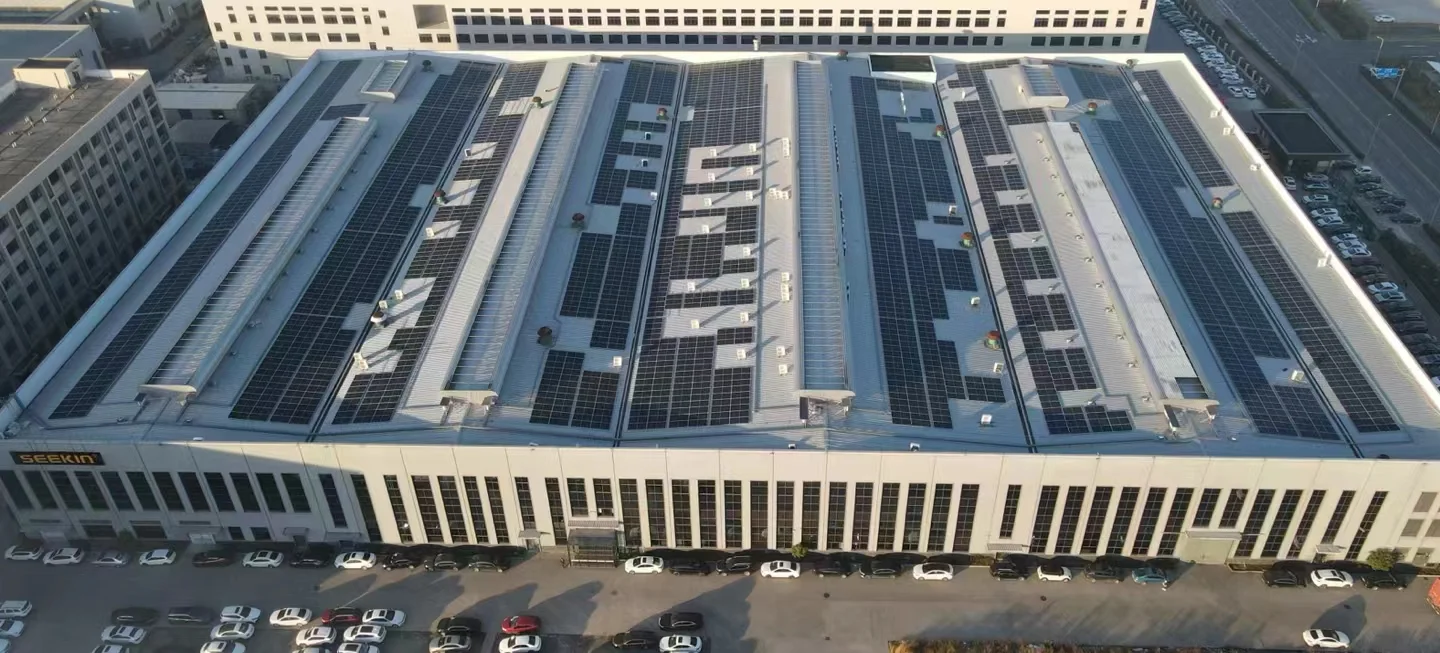
A 230kW photovoltaic project for a logistics enterprise deploys LONGi 635W double-glass modules paired with two Huawei 110kW inverters, achieving self-sufficient power supply for the logistics park via low-voltage grid connection. The double-glass modules demonstrate outstanding pollution resistance and mechanical strength amid dust generated by round-the-clock loading and unloading operations. The system design prioritises stable power loads to support the facility’s 24-hour continuous operation.